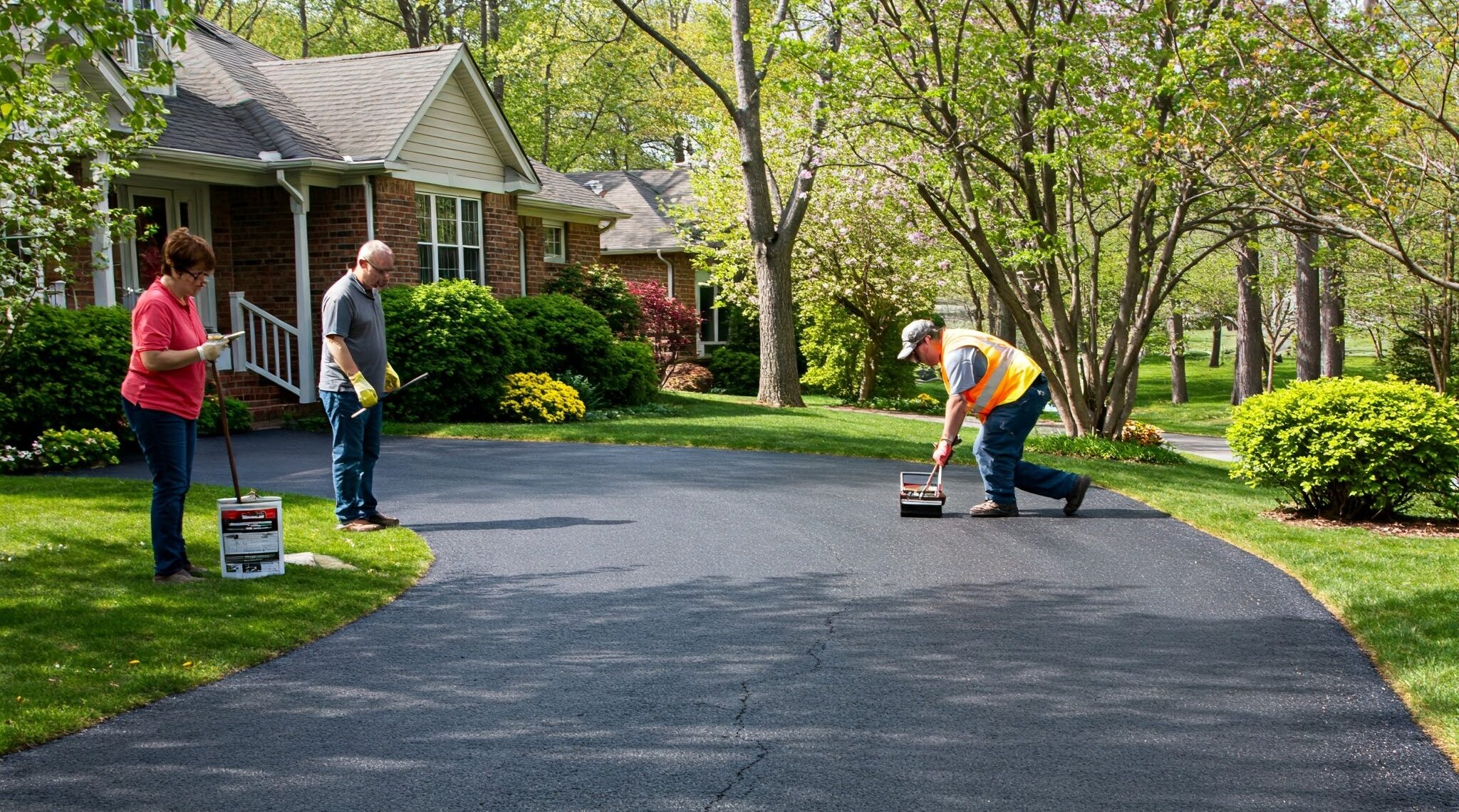
Small driveway problems can become expensive repairs when you leave them untreated. Routine driveway maintenance can help manage minor surface wear, but growing cracks and sinking areas may need repairs.
Dealing with these problems early is especially important in Ontario, where repeated freezing and thawing can make minor damage worse. Before choosing a repair, though, it helps to understand what is causing the damage.
For example, a loose paver and a dip in the driveway can both make the surface uneven, but they may need very different repairs. The loose paver may simply need resetting, while the dip may point to a problem with the base beneath the paving.
The ten signs below can help you recognize which problems routine maintenance can address and which may need professional assessment.
Why Driveways Develop Damage Over Time
Driveways develop damage because moisture and daily traffic break down the surface, while the soil beneath it settles. Here are the 6 main causes behind it.
- Freeze-thaw cycles widen gaps whenever water seeps in and freezes.
- Heavy vehicles crack sections too thin to support their weight.
- Poor drainage leaves standing water that soaks into the base.
- Soil movement shifts the ground and leaves sections unsupported.
- Weed roots grow into joints and push the pavers apart.
- Age wears down every surface, and improper installation or skipped upkeep shortens its life.
Sign #1: Cracks are appearing or getting wider
Cracks show that the driveway surface has started to weaken, and deeper openings can give water a path toward the base. How serious the damage is depends on the crack’s width and depth, whether water is getting inside, and whether the opening continues to grow. 4 factors decide how serious a crack is.
- Hairline cracks usually stay near the surface, so they can often be handled with sealing.
- Wider cracks can extend deeper, giving water a clearer path toward the base.
- Once water gets inside, freezing temperatures can make it expand and push the crack wider.
- If a crack keeps widening from one season to the next, the problem may need repair rather than another round of sealing.
Sign #2: Potholes are forming on the driveway
Potholes need prompt repairs because they expose the supporting layers beneath the surface. After water and traffic break away weakened asphalt, the opening creates 3 concerns that can make delays costly.
- Water collecting inside can loosen the surrounding material.
- Broken edges create trip hazards and can damage tires or wheels.
- Delays can increase the area that needs patching or base repairs.
Sign #3: The driveway surface is crumbling or breaking apart
A crumbling driveway surface often starts when water and salt weaken its upper layer. As that surface continues to deteriorate, these 4 signs can show how far the damage has progressed:
- On concrete, early surface wear can appear as thin patches that begin to flake away.
- As more of that surface wears away, loose aggregate (the small stones in the mix) can begin collecting across the driveway.
- On paver driveways, similar wear show up as chipped or split corners.
- As the damage gets worse, weakened surface material may start breaking away underfoot.
Sign #4: Pavers are shifting, sinking, or becoming uneven
Shifting or sinking pavers often mean the bedding sand beneath them has moved or lost support. The way those pavers move can help show whether the problem comes from uneven pressure, soil movement, or drainage:
- Individual pavers may rock underfoot or sit higher than the stones around them.
- Gaps can widen between pavers as they gradually shift apart.
- Sunken patches can develop where vehicles regularly stop, turn, or place repeated pressure on the same area.
- When the ground beneath the driveway shifts, some pavers can rise while others begin to sink.
- Poor drainage can also wash bedding sand away, leaving nearby pavers without even support.
Sign #5: Weeds are growing between driveway pavers
Weeds between pavers often appear once joint sand has thinned out and left more space for seeds and soil to settle. As those joints lose sand, these 4 points show how weed growth develops and how regular top-ups can help control it:
- As the joints open up, they can collect wind-blown seeds and loose soil.
- Once weeds become dense, they can point to joints that have lost a noticeable amount of sand.
- As those weeds take hold, their roots can widen weak joints and loosen the pavers around them.
- To restore those joints, regular top-ups with polymeric sand can firm up the gaps and make it harder for new weeds to take hold.
Sign #6: Water is pooling on the driveway
Standing water often points to a grading or drainage problem that keeps rain from moving off the driveway. Where the water collects and how long it stays can help show what is causing the problem and what damage may follow:
- Puddles that remain well after the rain stops can point to an area that is not draining properly.
- Poor grading can create low spots where rainwater collects.
- Blocked drains can also send water back across the driveway instead of carrying it away.
- When that water remains trapped, it can seep through joints and reach the base below.
- Once winter arrives, trapped water can freeze and expand, pushing affected driveway sections upward.
Sign #7: Edges of the driveway are crumbling or breaking down
Crumbling driveway edges often point to lost support from eroded soil or weakened edge restraints. Because the outer edge has less surrounding support, these 4 conditions can make the damage spread quickly:
- Tires that repeatedly track along the edge place extra pressure on an area that already has less support.
- Runoff can also move along the driveway sides and wash away supporting soil.
- As that supporting soil erodes, outer pavers and slab edges can begin to crack or settle.
- Once those edges become loose or cracked, the damage can begin spreading farther toward the centre of the driveway.
Sign #8: The driveway has become discoloured or stained
Most driveway stains need cleaning, but a mark needs closer attention when the paving beneath it feels soft or starts breaking apart. 4 common changes help explain the difference.
- Vehicle leaks leave oil marks, and prolonged exposure can soften asphalt.
- Moss or algae can make damp paving slippery.
- Dirt buildup can hide cracks that need checking after cleaning.
- Weathering can fade the surface without weakening otherwise sound paving.
Sign #9: The driveway feels uneven or has started to sink
Larger sections sink when the supporting ground settles or loses strength, creating a problem that routine driveway maintenance cannot correct. 4 observations help separate a loose surface stone from a problem affecting the whole section.
- A spreading dip can indicate movement beyond one small patch.
- A poorly compacted sub-base (the supporting layer) can compress under repeated loads.
- Poor drainage can leave the driveway base wet and unstable.
- Uneven levels between sections create trip hazards.
Sign #10: Damage keeps returning after cleaning or minor repairs
Damage can return when cleaning or a surface repair leaves the original cause unresolved. Before you pay for the same work again, photos and notes from earlier repairs help compare the following recurring problems.
- Reopening cracks call for checking movement or the repair method.
- Repeated sinking needs investigation beneath the affected paving.
- Persistent weeds justify revisiting the joint conditions covered earlier.
- Returning puddles need another drainage check, especially after someone has cleared the outlets.
Driveway maintenance problems vs repair problems
Maintenance problems stay on the surface, while repair problems reach the base underneath. The table below compares both in 6 ways.
| Factor | Maintenance problem | Repair problem |
| Damage depth | Surface only | Base or sub-base |
| Common signs | Stains and small weeds | Potholes and sinking |
| Safety risk | Low | Moderate to high |
| Typical fix | Cleaning and sealing | Patching or re-levelling |
| Urgency | Routine schedule | Prompt attention |
| Cost | Lower | Higher |
How quickly should you address driveway damage?
Problems that affect safe access or keep worsening need prompt attention. Once you separate those concerns from ordinary surface wear, the following priorities help you decide what needs action first.
- Large potholes or severe unevenness need an early repair assessment. Until then, keeping people and vehicles away reduces immediate risk.
- Rapid sinking or major cracks need prompt inspection, particularly when the surface changes noticeably between checks.
- Standing water becomes a priority when it reaches the garage or freezes across a walking route.
- Broken edges need attention before vehicles remove more material during normal parking.
- Minor staining and surface dirt can usually wait for planned cleaning if the paving remains firm.
- Small weeds and minor joint deterioration belong in the next round of upkeep, before more sand disappears.
Can regular driveway maintenance prevent major repairs?
Regular driveway maintenance can reduce avoidable damage, although a failing base still needs repairs. The following habits work together to catch small changes before they become larger problems.
- Cleaning removes dirt that could conceal fresh damage.
- Weed removal makes the joints easier to inspect before more debris collects.
- Fresh joint sand supports stable pavers when you follow the product’s installation instructions.
- Drainage checks after heavy rain reveal blocked outlets and new pooling.
- Dated photographs help track crack changes during seasonal inspections.
- Prompt repairs can limit how far minor surface deterioration spreads.
Consult professionals for maintaining or repairing your driveway in Canada!
Many of the signs above start small, but they become harder to fix once the damage reaches deeper. Minor stains can wait for regular care, while sinking areas, potholes, and widening cracks need attention sooner. If the same problem keeps coming back, the cause may be deeper than the surface.
Allison Bros can check the surface, joints, drainage, and base before starting the repair. That check shows whether the driveway needs new joint sand, drainage work, or a different fix.
Keep small damage small. Book your free estimate today before the damage spreads!
Frequently Asked Questions (FAQs)
Q1. Will sealing fix a damaged driveway?
Sealing does not level a driveway or rebuild missing material. Repairs therefore need to come first. A compatible sealer may then help protect the surface.
Q2. Can pressure washing damage driveway pavers?
Yes, excessive pressure can damage pavers or wash joint sand away. For that reason, the manufacturer’s instructions should guide cleaning. A small test area also helps you check the result.
Q3. Do interlock and poured concrete driveways need the same maintenance?
Both need regular cleaning and good drainage, but they need care in different areas. Interlock needs enough joint sand and strong edge support, while poured concrete needs cracks repaired and less salt on the surface. The care you give the driveway should match the material and the problems you notice.
Q4. Does a driveway need maintenance all year in Ontario?
Checks after spring thaw and in early autumn help you assess seasonal changes and plan repairs before winter. Storms can justify an extra check. That extra inspection helps you catch fresh damage.