
A sloped backyard that drains poorly, loses soil after heavy rain, or simply can’t be used the way it should is telling you it needs structural support. Our backyard retaining wall construction provides exactly that – properly engineered, correctly built, and finished to last decades without intervention.
Backyard Retaining Wall Construction Services
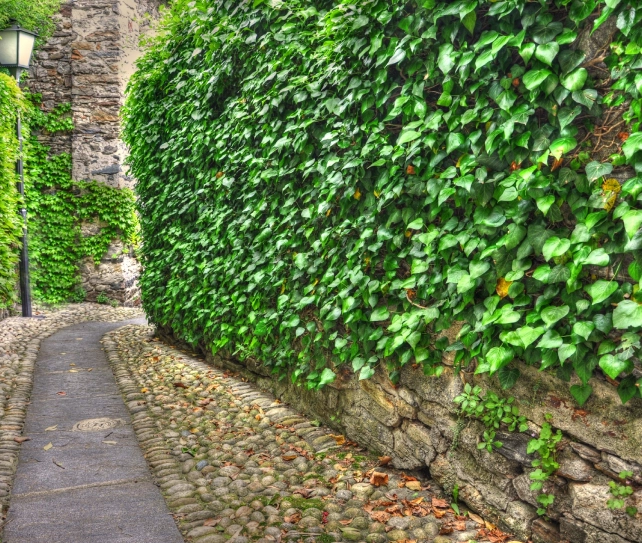
Properly Engineered Backyard Retaining Wall, Not Stacked Blocks
Most backyard retaining wall failures come down to two decisions – footing depth and drainage. A footing set too shallow shifts through Ontario’s freeze-thaw cycles. Whereas a wall without drainage behind it builds up water pressure. Neither failure is dramatic at first, but both compound slowly until the wall starts moving and the repair bill reflects years of accumulated pressure. Getting both right before construction begins is what every properly built retaining wall depends on.
Allison Bros’ backyard retaining wall construction keep those foundational decisions as top priority and building it correctly from the start. As a family-owned company with over 20 years of hardscape and retaining walls experience, every project starts with a thorough site assessment – soil composition, drainage behavior, slope load, and frost-line depth – all shaping how the wall is designed.
The result is a backyard retaining wall that holds its structure and manages drainage properly through the years of Ontario seasons.
What Goes Into Every Backyard Retaining Wall We Build
Every backyard retaining wall construction project is different – the slope, the soil, the drainage demands, and the structural load all vary from one site to the next. What never varies is the level of attention applied at every stage of the build. Here’s everything our retaining wall service includes:
- Excavation to the correct footing depth for Ontario’s freeze-thaw ground movement
- Concrete footing installation and material selections
- Block or stone placement to the correct batter angle for long-term structural integrity
- Geogrid reinforcement layers for taller walls requiring additional structural support
- Final capping course for a clean, structurally finished top to the wall
- Fence installation and maintenance where walls run alongside or define property boundaries
Keep in Touch
Get A Quote
FAQs
Frequently Asked Questions
Can I build my own retaining wall?
For walls under one metre on a gentle slope, possibly you can build your own. But, if drainage, significant load, or height beyond one metre is involved, the Ontario Building Code requires engineered drawings and a permit. Most DIY backyard retaining wall construction falls short at the footing and drainage stage.
What are common retaining wall failures?
Footing set too shallow, no drainage behind the wall, wrong batter angle, and incorrect backfill material are the four most common failures. Every backyard retaining wall construction project we complete addresses all four before a single block is placed.
What are the dangers of retaining walls?
No drainage means hydrostatic pressure builds until the wall moves. Shallow footings shift through frost heave. Walls over one metre without engineering can fail suddenly after heavy rain. Properly designed backyard retaining wall construction eliminates all three risks before anything goes into the ground.
Do I need drainage behind a retaining wall?
Yes, always. Every retaining wall needs drainage behind it. Without it, water pressure builds up and eventually pushes the wall over. A basic system – perforated pipe at the base of the wall with gravel backfill – is the minimum. For sites with significant water movement or clay-heavy soil, a more extensive drainage design is required.
What is the easiest retaining wall to DIY?
The easiest DIY is a dry-stacked stone or timber on a well-drained slope. Beyond that, the structural requirements move past what most homeowners can execute without professional experience. Retaining walls that fail after one winter cost more to fix than a properly built one would have cost upfront.
