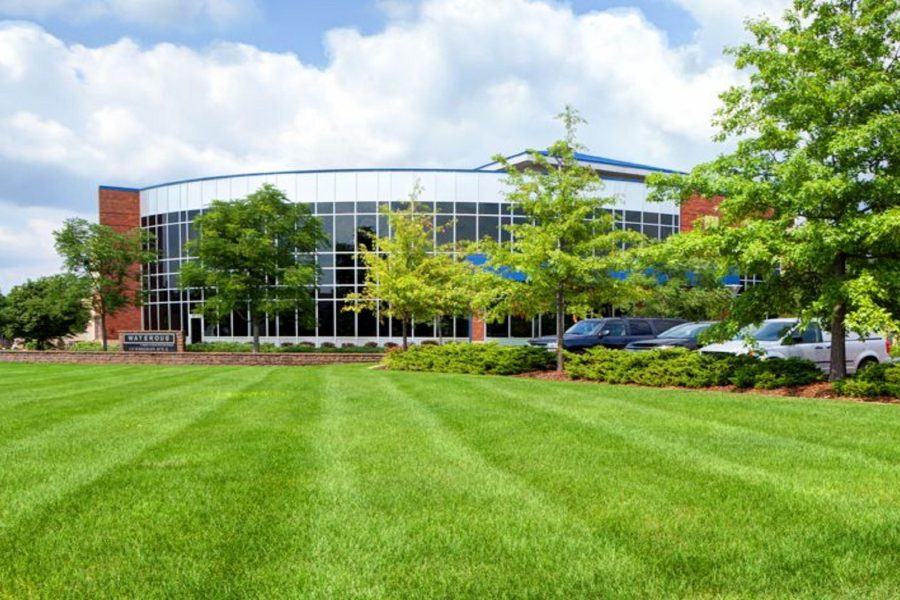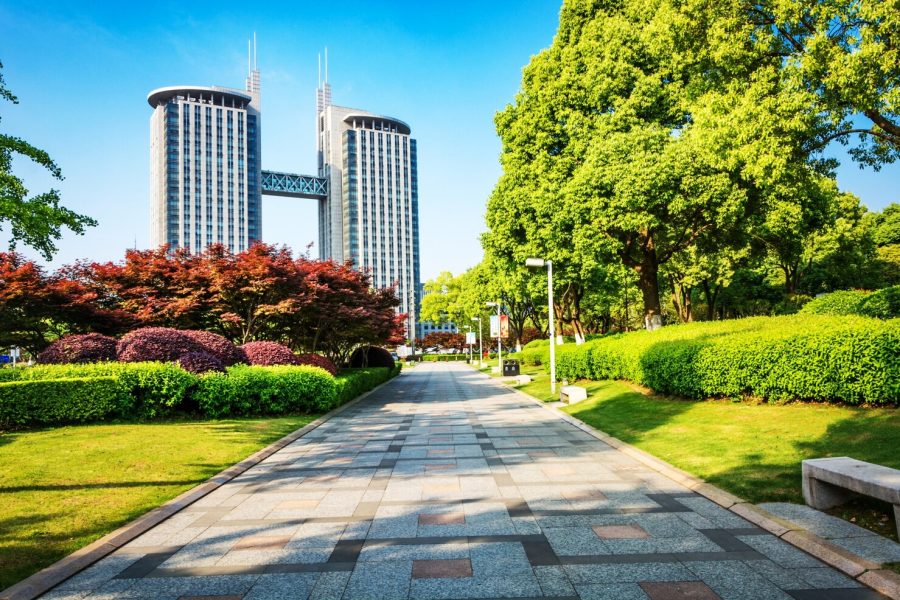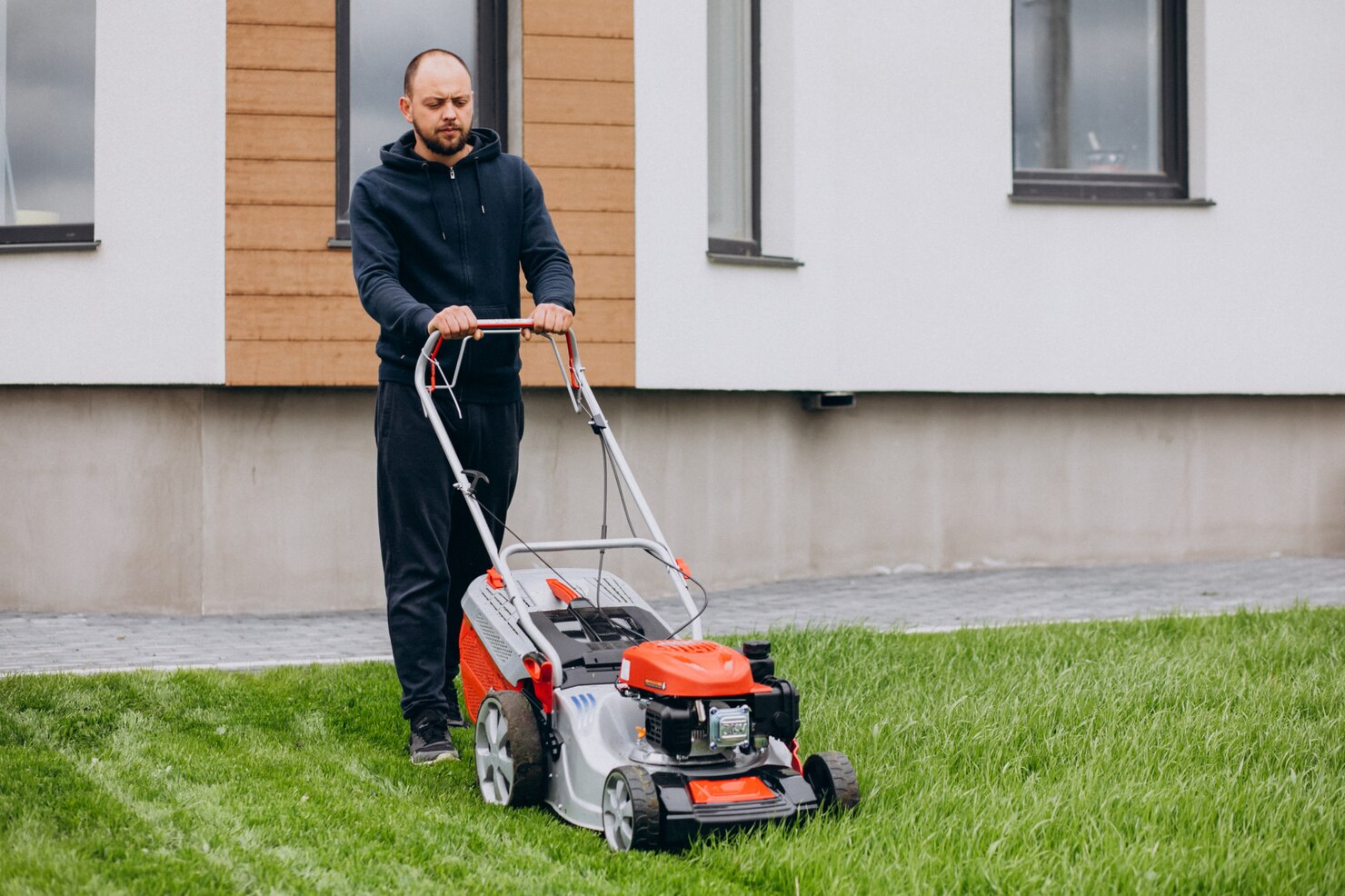
Pull your car into any commercial lot and “what’s the first thing your eyes catch?” No, it’s not the signage or the building’s fresh paint job. It’s GRASS! Long before anyone reads a tenant directory or steps through a front door, they’ve already clocked whether the lawn looks cared for or forgotten. And according to one recent survey, that split-second read sets the tone for the entire property tour. While, a neglected exterior creates hesitation even before anyone’s seen the inside.
Here’s what a lot of property managers get wrong, though: the problem usually isn’t the grass itself, it’s the gaps. Nobody is interested in knowing about the mowing schedule that got disrupted by weather or a staffing gap that week. They just see long grass and draw their own conclusions.
That’s the real thread running through this whole guide. Lawn care isn’t landscaping trivia bolted onto property management, it’s part of the job itself. What follows covers the mistakes that quietly wear down a commercial property’s appearance. Not only that, we’ll explore why steady maintenance beats the occasional deep clean and how to catch the warning signs before a tenant catches them first.
Why Lawn Care Plays a Bigger Role Than Most Property Managers Realize
It’s easy to file lawn care under “nice to have,” somewhere below HVAC repairs and lease renewals on the priority list. But the numbers tell a different story. Properties with professionally maintained landscaping have sold for roughly 5% – 12% more than comparable properties without it. That’s not just a rounding number, that’s real money tied directly to how the grass looks.
It’s not just about sale price, either. Tenants pick up on consistent grounds care, and that translates into something property managers actually feel: they stick around longer. Strong landscaping has been linked to noticeably longer lease renewals, pushing the average from around 2.8 years up closer to 4.2, mostly because a well-kept property just feels like somewhere worth staying.
And it’s not only about tenants and dollars. A well-kept lawn reinforces the professionalism of every business operating on that property and improves the daily experience for employees and visitors. It even plays a small role in safety, since overgrown grass and untrimmed edges around walkways can lead to slips, trip hazards and more which a tidy lawn simply doesn’t.
Mistake #1: Letting Grass Grow Too Long Between Mowing
Inconsistent mowing is one of those problems that’s invisible right up until it isn’t. A property mowed every week looks intentional. Whereas, a property mowed every 10 days, then every 3 weeks, then rushed back on schedule, looks like nobody’s really in charge of it, even if the total number of mows over a season ends up about the same. That unevenness is what actually reads as neglect to a visitor, not the grass height on any single day. Plus, curb appeal takes the hit almost immediately since a shaggy lawn drags the whole property down regardless of how sharp the building itself looks.
It’s not just about looks, either. Here’s the mechanism: grass that grows too long between mows takes a hard hit when it finally gets cut back down to size in one pass, and that kind of stress weakens the plant right when it needs to be strongest.
Weak, stressed turf is exactly where weeds get their opening. Repeat that pattern, long grass, hard cut, stressed lawn, weeds move in a few times over a season and the lawn thins out for good. Not because anything’s wrong with the grass itself but because it never got the chance to recover between cuts. Well, what might look like a simple scheduling mistake, actually, ends up costing way more in terms of turf health.
Mistake #2: Ignoring Weed Growth Until It Becomes Noticeable
It is not a surprise because weeds rarely show up overnight. They creep in slowly, a patch here, a few dandelions scattered there, easy enough to ignore individually. The trouble is every weed left alone is quietly pulling water and nutrients away from the turf trying to grow around it. So, by the time the problem is visible enough, the lawn’s already lost ground, making it kind of impossible to get back on its own. Weeds don’t stop politely at the edge of the grass either, they push right into landscape beds and start competing with whatever’s planted there too.
Waiting long costs more than it saves. A few weeds caught early get handled with a quick spot treatment. On the contrary, a property-wide infestation needs a much bigger, far more expensive intervention, and the visual damage is already done by the time anyone’s called in for help. Customers and visitors don’t need a gardening background to clock a weedy lawn as neglected, it’s one of the fastest ways a property loses credibility before anyone’s even parked the car.
Mistake #3: Poor Lawn Edging Around Walkways, Curbs, and Landscape Beds
You’d be surprised how little credit edging gets until it’s missing. Skip it, and a perfectly mowed lawn can still look off, grass creeping over a sidewalk, spilling past a curb, or dissolving into a landscape bed without any real line between the two. It’s a narrow band of work, barely visible when someone’s actually doing it right, and yet it’s the one thing that tells a maintained property apart from a well-maintained one.
And it matters most in the spots people actually stop and look, building entrances, signage areas, the places somebody’s standing still instead of just driving past. Let the edge grow out around a sign and you can genuinely block it from view, which is an odd way to lose business over a few extra inches of grass. Everywhere else along the property, clean lines against beds, curbs, and walkways are what make the whole lawn care job look deliberate rather than half-finished.
Mistake #4: Neglecting Bare Spots and Damaged Turf
A bare patch doesn’t sit still. Give it a month and it’s bigger, not because anyone made it worse on purpose, just because nothing stopped it. The stretch of grass between the parking lot and the front doors usually goes first, worn thin by the same feet crossing it every single day until the grass just can’t keep up.
Pack the soil down hard enough underneath that path, and it’s not just wear and tear anymore, roots can’t push through, water can’t soak in, and the grass there stays thin no matter how well the rest of the lawn is cared for.
A bad storm does its own kind of damage. Water pools in a low spot, sits there a day or two longer than it should, and the roots underneath just drown, that patch is gone for good at that point, no amount of mowing brings it back. Drought works slower but ends up looking about the same, weeks without rain and no extra watering to make up for it leaves grass brittle and bare in patches that don’t fill back in on their own. Disease is the one that catches people off guard most, since it can move through a lawn faster than most property managers expect.
Mistake #5: Overwatering or Underwatering the Lawn
Watering sounds like the simplest job on the list, and somehow it’s the one that goes wrong most often. Plenty of commercial irrigation systems are still running on a schedule set once and never revisited, regardless of whether it’s been raining for a week straight. Overwatered lawns turn soft and soggy, sometimes with fungus showing up in the wettest spots. On the other side, underwatered lawns turn grayish and dull. That’s not all, the grass stays flat instead of bouncing back.
That habit of watering on autopilot isn’t rare, and it’s not cheap either. The EPA estimates about half of all outdoor water use is wasted this way, systems watering on a timer instead of reacting to actual conditions. There’s no complicated fix here. Adjust the schedule by season, check the soil by hand instead of trusting the controller, and both problems usually disappear together, taking a chunk of the water bill with them.
Mistake #6: Forgetting Seasonal Lawn Maintenance
July asks for something completely different than October, and a lot of commercial properties get treated the same way twelve months straight, which is exactly where this goes wrong. Spring’s the cleanup month, dethatching, getting weeds out before they’ve had a chance to settle in, because whatever gets skipped here tends to snowball by August.
Summer flips the priority entirely. It’s not really about growth anymore at that point, it’s about keeping the lawn alive and presentable through the worst of the heat without it looking fried by August. Fall gets ignored more than any other season, and it’s arguably the one that matters most. Aeration and overseeding done in autumn is the reason a lawn comes back thick the following spring instead of patchy and thin, and clearing leaves before the snow flies keeps grass from smothering under a wet mat all winter.
Miss a step here and nothing happens right away, and that’s the trap. It shows up later, sometimes a full season later, right around when nobody’s thinking to blame October anymore.
Mistake #7: Treating the Lawn Separately from the Rest of the Landscape
Think about it this way that a commercial property’s landscape isn’t actually made of separate pieces, even when the maintenance plan treats it like it is. The grass touches the garden beds. It also grows under trees. Not to forget, the same grass runs along the walkways and shares the same sprinkler lines as the shrubs and hedges nearby.
None of that stops just because one crew’s only job is mowing. So when the lawn gets handled completely separately from everything else, the mismatch is obvious, a perfectly cut lawn sitting next to hedges nobody’s trimmed in weeks, or sprinklers set for grass that are slowly drowning the plants a few feet away.
Hardscaping is where this becomes impossible to miss. A patio or retaining wall can be built beautifully, but if the grass edge running along it is ragged, the whole thing still looks unfinished. That’s really the point here: a property looks put-together when someone’s managing the lawn, the beds, the trees, and the hardscaping as one connected job. Split all of that into five separate tasks handled by five separate people, and honestly, it ends up looking exactly like that.
Common Warning Signs Your Commercial Lawn Needs More Than Basic Maintenance
A handful of lawn problems are obvious from the street. Most aren’t, they build up gradually enough that someone can drive past the same warning signs for weeks before finally noticing. Spotting them early is what keeps a small fix small, instead of letting it turn into a full reseed job down the road.
- Persistent Weeds: coming back no matter how often you mow? That’s usually a sign of something happening below the surface.
- Yellowing Grass: worth investigating rather than shrugging off, it’s often a nutrient, disease, or watering issue underneath.
- Thin Turf: sparse patches are almost never a mowing problem, they’re a soil or root problem wearing a mowing disguise.
- Standing Water: if it’s still there a day after the rain stopped, the drainage is the actual issue, not the weather.
- Soil Compaction: especially common wherever there’s heavy foot traffic, compacted ground just won’t let roots do their thing.
- Bare Patches: if a spot’s had months to fill back in and hasn’t, that’s not a patience problem, it needs reseeding or actual soil work.
- Uneven Growth: different growth rates across one property usually trace back to inconsistent soil or watering coverage.
- Moss Development: wherever grass is already struggling, shade, compaction, poor drainage, moss tends to move right in.
- Poor Drainage: a full day of standing water after rain isn’t bad luck. It’s the property telling you the grading needs work.
Explore How Professional Commercial Garden Maintenance Can Help You Out!
By now the pattern should be pretty clear. Almost every mistake on this list traces back to the same root cause, inconsistency, not bad grass and not bad luck. A property that gets the same level of care every single visit, mowing, edging, seasonal work, weed control, just doesn’t run into most of these problems.
There’s no trick to it. It just has to actually happen on schedule, every time, whether or not something else is going on at the property that week.
- Mowing, edging, and seasonal care that stays on schedule, no exceptions
- Weed control, irrigation tuning, and turf repair handled before problems become visible
- A team that treats the lawn as part of the whole property, not its own separate job
Twenty years of keeping commercial properties across Durham Region looking cared for has taught Alison Bros and its team that it’s never a mystery why one lawn looks great and another doesn’t. Their commercial garden maintenance services cover routine mowing through seasonal turf care along with other services, so you don’t have to second-guess what the lawn looks like this week. Get in touch to make sure your grounds are working in your favour, not against it.
Frequently Asked Questions (FAQs)
Q1. What are the challenges of landscaping?
Weather that won’t cooperate, staffing that’s hard to keep consistent, and budgets that don’t always match what a property actually needs. Most challenges come down to keeping quality steady even when conditions aren’t.
Q2. What is the 1/3 rule for lawn care?
Never cut more than a third of the grass blade’s height in a single mow. Go beyond that and the lawn gets stressed, which opens the door to weeds and thinner turf down the line.
Q3. What are the most common lawn care mistakes to avoid?
Mowing that falls off schedule, weeds left alone until they’ve taken over, messy edging, and irrigation left on autopilot no matter the weather. Look closely and it’s rarely one bad call, it’s the pattern of small ones.
Q4. What percentage of lawn care businesses fail?
It’s a rough industry to survive in. About 70% of landscaping businesses close within their first 18 months, according to a 2024 labor market report, usually due to inconsistent service rather than a lack of horticultural knowledge.
Q5. What are some red flags when hiring a lawn care service?
No real schedule, vague answers on pricing, and hesitation when you ask what’s actually included, those are all worth paying attention to. If they can’t speak specifically about your property, they probably haven’t looked at it closely yet.